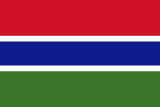
Gambia
Africa
Age Verification Compliance Overview
This page provides comprehensive age verification and compliance information for Gambia. Our research team continuously monitors regulatory changes, enforcement actions, and legal developments to ensure businesses have access to up-to-date compliance intelligence.
Gambia maintains a "Heavily Regulated" approach to age-restricted content. This classification indicates strict compliance requirements including mandatory age verification, specific technical implementations, regular audits, and substantial penalties for non-compliance. Businesses operating in this jurisdiction must implement comprehensive age assurance systems and maintain detailed compliance records. Legal consultation is strongly recommended before entering this market.
The information below includes regulatory status, legal requirements, enforcement mechanisms, penalties for non-compliance, acceptable verification methods, and relevant regulatory authorities. This data is essential for platforms, content providers, and businesses that need to implement age-appropriate access controls or verify user ages.
Minimum Age
Not specified
Required age for platform access
Age Gate Required
No
No verification required
Last Verified
10/12/2025
Most recent data update
Regulatory Timeline
Historical changes and upcoming regulatory events
- Heavily Regulated
Personal Data Protection and Privacy Bill 2025 passed: The National Assembly passed a landmark law establishing a comprehensive legal framework for personal data protection.
- Heavily Regulated
Children and Vulnerable Groups Online Protection Policy validated: The Ministry of Communication and Digital Economy finalized the validation of a policy aimed at safeguarding minors in the digital space.
- Heavily Regulated
Cybercrime Bill 2023 introduced in National Assembly: The proposed Cybercrime Bill, which includes broad criminalization of online speech (e.g., 'false news', 'prurient' content, 'sexually explicit content' even if consensual) and extensive surveillance powers, was approved in its first reading.
- Heavily Regulated
Malabo Convention came into force: The African Union Convention on Cyber Security and Personal Data Protection, signed and ratified by The Gambia, came into force.
- Heavily Regulated
Access to Information (ATI) Act signed: President Barrow signed the ATI Act, guaranteeing the right to information and aiming to improve government transparency.
- Heavily Regulated
Police report rising pornography and revenge porn: Chief Inspector Cherno Bah of The Gambia Police Force stated that pornography, particularly 'revenge porn' (non-consensual sharing of intimate images), is a rising issue.
- Heavily Regulated
ICA amendments for judicial oversight rejected: Parliament rejected amendments to the ICA that would have provided judicial oversight for surveillance powers.
- Heavily Regulated
Draft Data Protection and Privacy Policy issued: PURA issued a draft policy to establish rules for data processing by private and public-sector entities, but it was not implemented into law as of August 2021.
- Heavily Regulated
Supreme Court ruling on ICA and Criminal Code: The Supreme Court declared Section 173 of the ICA 2013 unconstitutional, struck out criminal defamation, and narrowed the definition of sedition. However, it upheld provisions prohibiting 'false publication and broadcasting'.
- Heavily Regulated
ECOWAS Court ruling on media laws: The ECOWAS Community Court ruled that Gambian authorities should repeal sections of the Criminal Code on libel, sedition, false news, and false publication on the internet.
- Heavily Regulated
Pornography and other blocked websites became accessible: Following the new government taking office, all previously blocked websites and apps, including those containing pornographic material, became accessible.
- Heavily Regulated
Internet and mobile network shutdown: Authorities shut down the entire internet and mobile networks across the country on the eve of presidential elections, purportedly to prevent the spread of false information.
- Heavily Regulated
National Cyber Security Strategy plans unveiled: The Jammeh administration unveiled plans to set up a new National Cyber Security Strategy to monitor cyber threats, including scrutiny of personal data protection and computer misuse.
- Heavily Regulated
First Internet Exchange Point (IXP) launched: Launched to boost speed, security, and affordability of internet services.
- Heavily Regulated
Cybercrime Act: Legislation prohibiting child pornography (Section 28) and obscene publication (Section 29).
- Heavily Regulated
Information and Communication Act (ICA) amendments: Amendments criminalized online dissent, including 'criticising, impersonating, or spreading false news about public officials' online, with severe penalties.
- Heavily Regulated
ACE Submarine Cable lands: The African Coast to Europe (ACE) Submarine Cable landed, increasing internet penetration.
- Heavily Regulated
Information and Communications Act (ICA): Primary law governing information and communication technology, including Section 138 prohibiting offensive/indecent communications and Part XIII on personal data/privacy. Grants sweeping surveillance powers without judicial oversight.
- Heavily Regulated
Official Secrets (Amendment) Act: Prescribes penalties for unauthorized disclosure, retention, possession, or use of official information.
- Heavily Regulated
Children's Act: Legislation forming the basis for child protection, implicitly reinforcing the prohibition of child pornography and content harmful to minors. Criminalizes sexual acts with any child under 16.
- Heavily Regulated
PURA established: The Public Utilities Regulatory Authority (PURA) was set up in 2004 to regulate the activities of telecom service providers and other public utilities.
- Heavily Regulated
Public Utilities Regulatory Authority (PURA) Act: Established the Public Utilities Regulatory Authority (PURA) to regulate public utilities, including telecommunications.
Data Sources
Legal documents and references supporting this data
Showing 5 of 16 sources
article19.orgAnalysis-the-Gambia-Cybercrime-Bill-2023-26-March-2024.pdf
africa-press.netminister-updates-children-nams-on-online-protection-policy
ipi.mediathe-gambia-parliament-must-amend-draft-cybercrime-bill
babl.aigambia-passes-landmark-data-protection-and-privacy-law
hrw.orgGambia%20Criminal%20Code%20Act%202014.pdf
All sources are evaluated for credibility and relevance. Primary sources indicate official legal documents and government publications. Credibility scores reflect source reliability based on jurisdiction, publication authority, and verification status.
Related Countries
Countries with similar regulatory frameworks
Regulatory Authorities
Regulator contacts will appear here as they become available.